
Your organisation is healthy. Are your people?
Ergonomic risk across your whole workforce — scored by AI on any phone, reviewed and signed by a certified ergonomist, delivered as audit-ready compliance data.
Who are you? Jump to your role
OSH / EHS
Cut MSD rates with hazard-level evidence
What you controlHR / People
Every worker assessed, none off the floor
Coverage dutyESG / BRSR
OHS data that maps directly to SEBI BRSR
BRSR line itemsAudit & Compliance
Defensible evidence, signed by a clinician
What you sign forEmployees
Your personal ergonomic risk report
Your reportThe unmeasured half of performance.
Most companies measure performance. Few measure whether their people can physically sustain it — and that gap is where productivity quietly leaks away.
Revenue · KPIs · Growth
Burnout · MSK pain · Fatigue
Performance = Organisational Health × Workforce Health
OHI tells you if your business can perform. Workforce Health tells you if your people can sustain it. Ergonomics is where workforce-health measurement starts — and it's a performance lever, not a benefit.
See the full caseSeven dimensions decide whether your people can perform.
Engagement scores see none of them. Ergonomics is the one that's measurable, mandated and addressable today — so it's where we start.
Ergonomic strain (MSDs)
~1/3 of work-injury cases and the primary driver of multi-week presenteeism.
66–71% of Indian desk workers affected
Mental health & burnout
Depression and anxiety quietly erode focus and drive absence.
$1T/yr lost globally · WHO 2024
Sleep & recovery
Short sleep measurably cuts day-to-day productivity.
~$411B US annual loss · RAND 2016
Environmental quality
Ventilation and air quality move cognitive performance.
+61–101% cognition · Harvard, Allen 2016
Social & community
Screen-only isolation raises stress-driven absence.
Physical health & stamina
Sedentary roles erode stamina and accelerate attrition.
Nutrition & energy
Poor fuelling drives afternoon cognitive dips.
Start with what you can measure.
The other six matter — but ergonomics is the one you can score and fix now.
Strong on org metrics. Total blind spot on physical strain.
Wellness perks exist. Ergonomic help only after injury.
Workforce health tracked alongside performance. Risk codified.
Human capacity informs strategy. Real-time risk on the dashboard.

of desk workers report MSDs annually
India's 20M+ desk workers are in pain.
No scalable solution exists.
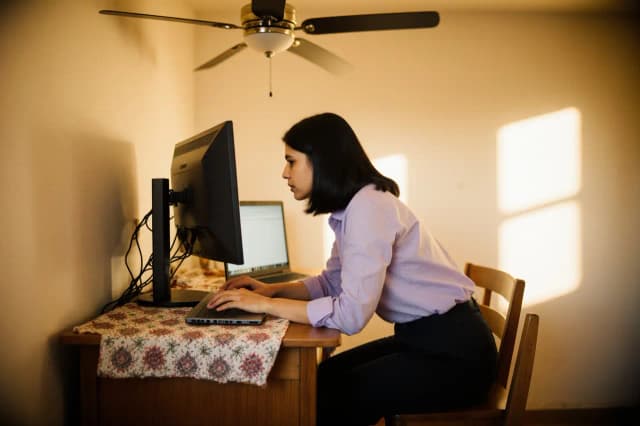
76% of office workers report neck, back, or shoulder pain within any 12-month period — the leading driver of absenteeism, productivity loss, and rising insurance claims.
Manual ergonomic assessments cost ₹5,000–15,000 per employee and take weeks. India has fewer than 5,000 qualified ergonomists for a working population of 500M+.
No India-first, scalable, affordable platform exists. Global tools are Western-priced, hardware-dependent, or built for industrial settings.
AI computes. Ergonomist validates. Worker is protected.
A clinically sound assessment in under 5 minutes — at a fraction of the cost of a manual one.
Worker films workstation
Any smartphone, via a link or QR code. No app download. Takes ~5 minutes. Video never leaves the device.
AI scores posture on-device
On-device CV extracts joint angles and scores against 10 camera-scored frameworks — RULA, REBA, ROSA, NIOSH, OCRA, JSI, OWAS, LUBA, Liberty and MMC-ISO.
Ergonomist validates every score
A certified ergonomist reviews and signs off every AI output. No number reaches the worker un-reviewed.
Worker gets a personalised report
OTP-gated PDF with prioritised, actionable recommendations — generated after ergonomist approval.
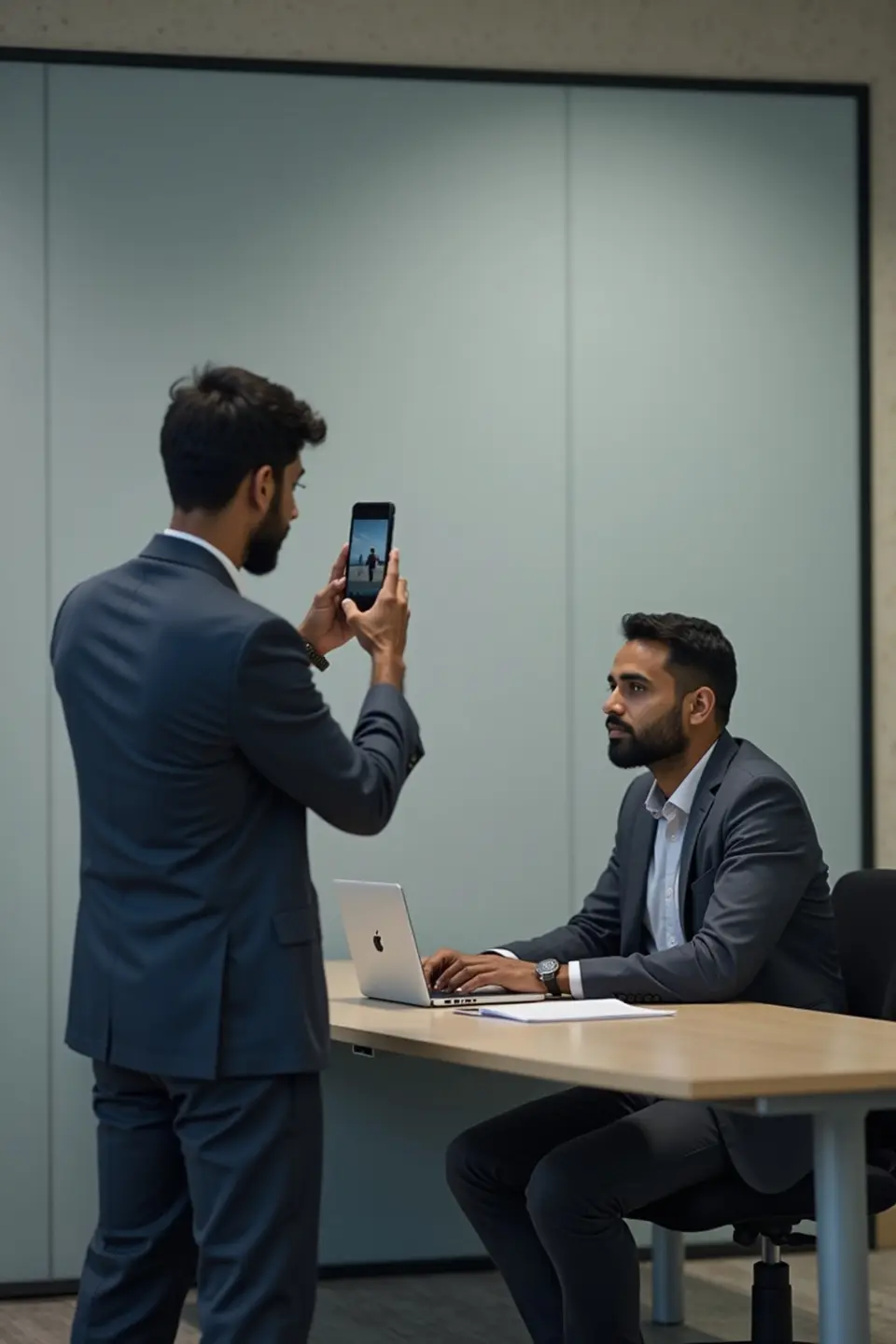
Joint angles are computed by geometry from on-device landmarks — no self-report, no manual goniometer. Every score is reviewed and signed off by a certified ergonomist before the worker sees it.
Every output is reviewed and signed by a qualified ergonomist, computed from the standard's own formula, and retained as a documented, audit-defensible trail — the evidence your OSH Code 2020 and ISO 45001 audit file needs.
See a sample audit-ready report11 frameworks live. One assessment engine.
RULA, REBA, ROSA, NIOSH, OCRA, JSI, OWAS, LUBA, Liberty Mutual, MMC-ISO and RPA are all live end-to-end across the posture, load and repetition risk families — plus 3 validated surveys. Each built fresh from its primary-literature blueprint on a shared configurable engine.
More methods on the roadmap — each new one costs ~20–30% of the first on the shared engine.
Compare all 11 methodsBuilt for enterprise from day one.
Security, compliance, and clinical rigour aren't features — they're the foundation.
DPDPA & OSH Code compliant
Versioned consent, right-to-erasure, employer-aggregate-only RLS. Compliance shipped — not planned.
Clinically validated, every report
Certified ergonomist signs off every assessment. Clinically sound, legally defensible.
Built for global enterprises
EU/UK DSE mandates require assessment for every screen user — your India staff are included.
Camera or camera-free
Run the same assessment by phone video — or, where cameras aren't permitted, as a structured text survey. Same frameworks, same ergonomist sign-off.
A fraction of manual cost
Manual assessments cost ₹5,000–15,000/employee and take weeks. Ergocure.ai delivers the same clinical standard at scale — contact us for pricing.
48-hour turnaround
From assessment submission to approved report in under two working days.
Audit-ready BRSR data
Every assessment generates OHS data that maps directly to SEBI BRSR reporting requirements.
For a 1,000-seat enterprise, the math is one-sided.
A fraction of the cost of one day of lost productivity. Less than your first compliance penalty.
Explore compliance & ROIOne OSH-Code penalty, MSD injury claim, or BRSR-disclosure gap costs more than the whole annual programme — and the money is already allocated, as a named line in the ESG “S” pillar your CSR and BRSR obligations fund. Risk-avoidance from a budget you already have, not discretionary spend.
Assumes ₹10 L avg loaded cost/employee · 76% MSD prevalence · conservative 3% productivity drain
Figures shown in ₹ for India. Operating in the US, UK, EU, Australia or Japan? See your localised cost-of-inaction →
Built on standards. Signed by qualified clinicians. Certified end-to-end.
Built for the people who own workplace risk — OSH, HR, ESG and audit & compliance teams. Every assessment runs to international ISO standards, is reviewed and signed by qualified ergonomists and occupational therapists, and is delivered inside an ISO 45001-certified system.
Clinical authority
Every report is reviewed and signed by qualified ergonomists and occupational therapists — the professions internationally recognised for ergonomic assessment and workplace intervention. Clinical sign-off carries the weight an automated tool can't.
International standards
Assessments conform to ISO 11228 (manual handling), ISO 11226 (static posture) and ISO 9241 (office / DSE), with programme practice aligned to US OSHA and ANSI Z490.1.
ISO 45001:2018 certified
ISO 45001:2018Ergocure India operates a certified Occupational Health & Safety management system — registered scope: ergonomic assessment, audit, consultation, training and intervention. An audited, repeatable system, not ad-hoc consulting.
ISO 45001 Clause 6.1.2 requires you to actively identify and assess ergonomic risk — and explicitly triggers the technical ISO 11228 and ISO 11226 assessments your auditor will ask to see. Ergocure's engine isthose assessments: NIOSH & MMC-ISO for lifting (ISO 11228-1), RULA / REBA / OWAS for posture (ISO 11226), ROSA for the office workstation (ISO 9241) — scored at scale, signed by qualified clinicians, ready for your audit file.
See the ISO standards & how we assess them
Our certified ergonomists
Occupational therapists & ergonomics consultants · ERGOCURE® practice since 2013
Every score is reviewed and signed by a certified ergonomist.
Ergocure is built and run by certified ergonomists and occupational therapists — the professions recognised internationally for ergonomic assessment and workplace intervention — on a clinical practice with 20+ years of experience (ERGOCURE®, est. 2013).
The framework selection, scoring logic, recommendation library and review workflow encode that clinical methodology — not a software team's interpretation of it. No AI score reaches a worker, or your audit file, un-reviewed.
The practice holds standing onsite retainers with two major enterprise customers — the kind of global enterprises your programme will serve.
What employees say after one session
Anonymised, verbatim feedback from a recent enterprise engagement.
I started getting relief from pain by day one.
Very calm and empathetic — she understands the problem and gives the right solution.
I would highly recommend her to everyone.
Everything that's ready to run
11 clinical frameworks, 3 validated surveys and the Modified LEST site-assessment instrument, every ergonomic risk family and six capture modalities — all live on one engine, audit-ready for Indian compliance.


See your team's risk report in 48 hours.
Request a Pilot. We'll set up your first campaign, run assessments with your team, and deliver clinically validated reports — so you can gather employee feedback before an organisation-wide rollout.
Live with a listed Indian electronics manufacturer · DPDPA compliant · OSH Code ready